
コンテンツへスキップ ナビゲーションに移動
WELL AIR

Top

  1. WELL AIRとは(トップ)
  2. Top
WELL AIR
Problem Features Technology Performance Configurations FAQ
Contact Us
Problem Features Technology Performance Configurations FAQ Product Lineup Contact Us
JP EN
WELL AIR Element-Free Compressed-Air Purifier

Separates condensate, oil droplets,
and foreign matter—all in one.

Upgrade compressed-air quality at the equipment inlet.

WELL AIR uses high-speed swirling airflow and impaction separation to remove water droplets, liquid oil droplets, and solid contaminants from compressed air. Its internal structure does not use a replaceable filter element, and it operates without electricity or an external heat source.

View Product Lineup Download International Catalog
Why

Contaminated compressed air can threaten stable equipment operation.

Water is not the only concern in compressed-air systems. Liquid oil and solid contaminants can also lead to pneumatic-equipment trouble, corrosion, product defects, and increased maintenance work. Even after compressed air passes through a dryer, condensate may form again near the equipment because of long piping and temperature changes.

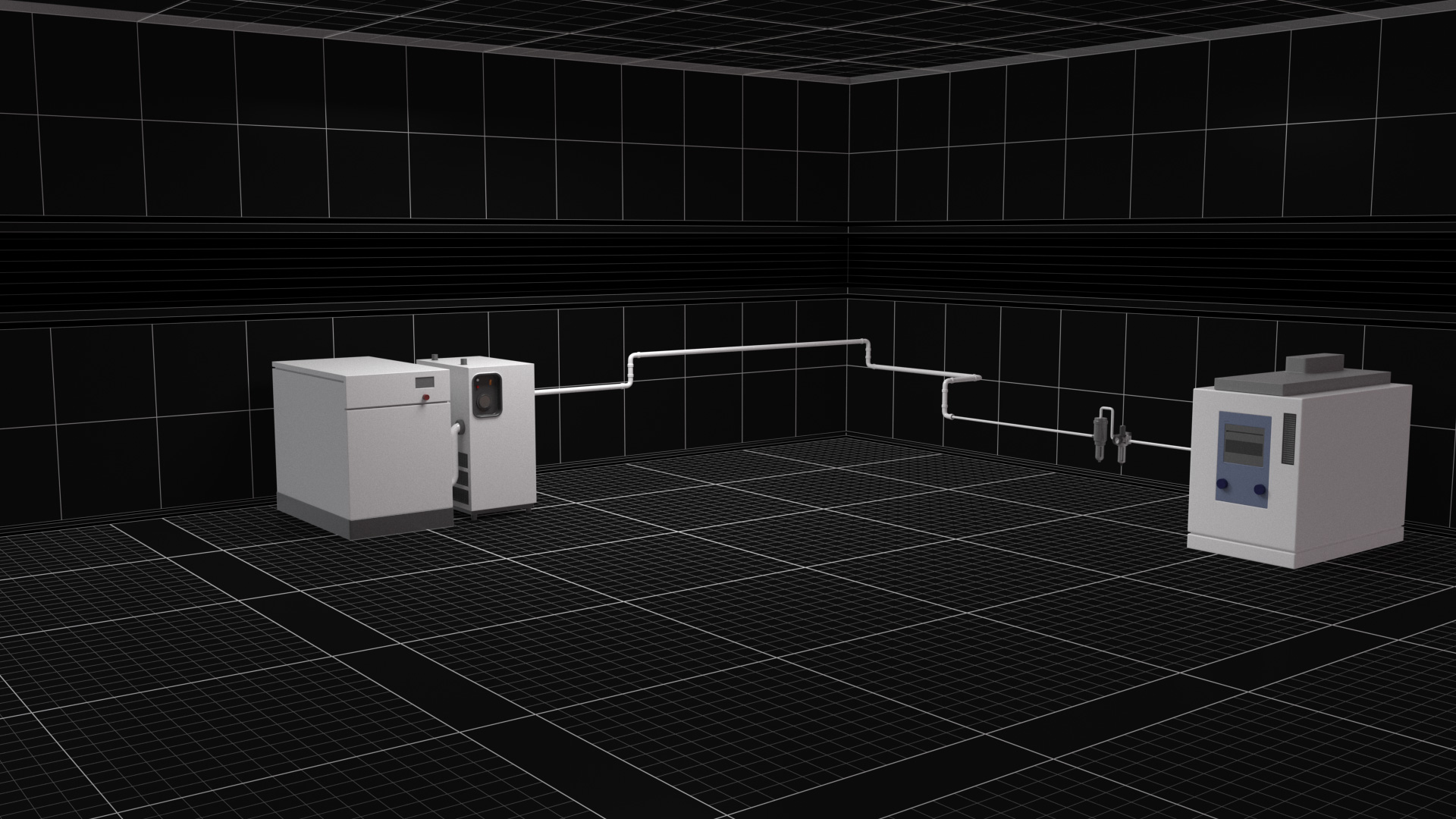
Illustration of re-condensation forming inside a compressed-air piping system

A final line of protection
at the equipment inlet.

Air dryers are effective for reducing moisture upstream, near the compressor. However, compressed air can cool as it travels through long piping, causing water vapor to condense again before reaching the point of use.

Liquid oil carried from the compressor and solid contaminants such as rust or debris inside the piping may also reach downstream equipment together with the condensate.

WELL AIR is installed close to the equipment inlet to separate liquid droplets and solid contaminants before they enter the machine. It serves as a point-of-use pretreatment stage for achieving the air quality required by each application.

The key is to treat water droplets, oil droplets, and solid contaminants immediately before they enter the equipment.
Demonstration

Water Droplet Separation Test

This test video shows how WELL AIR separates liquid water droplets from compressed air. It provides a visual overview of the role WELL AIR can play as point-of-use protection near the equipment inlet.

  • See liquid water droplets being separated from the airflow
  • Understand the point-of-use separation concept at a glance
  • See how the separated liquid is collected and discharged

* The video demonstrates water-droplet separation under the test conditions shown. Actual results may vary depending on flow rate, pressure, piping, and operating conditions.

View Product Lineup Watch on YouTube
Features

Key Features of WELL AIR

For international markets, WELL AIR is offered in the DT configuration, designed with consideration for drain containing liquid oil and solid contaminants.

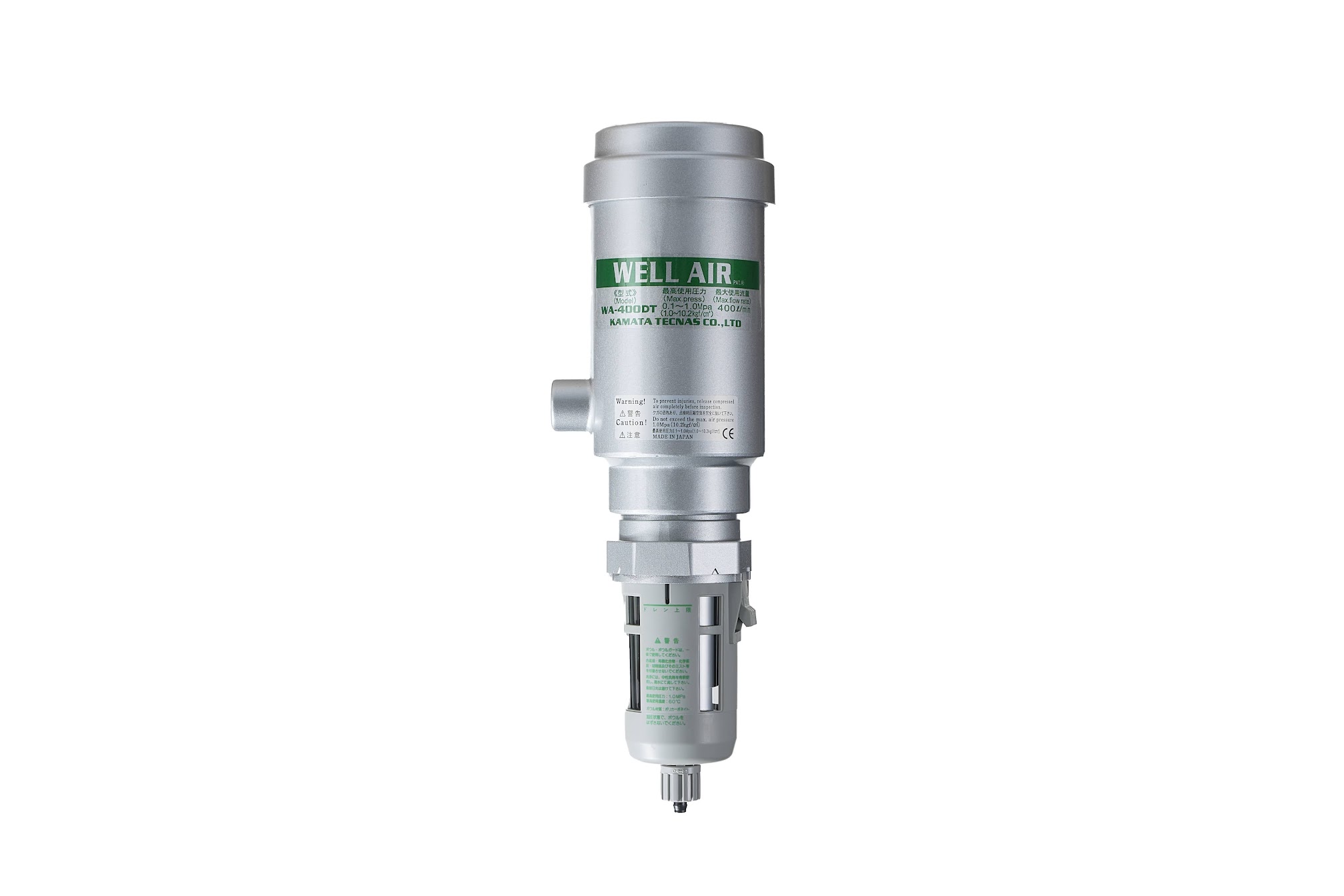
Front view of WELL AIR
FEATURE 01

Element-Free
Separation Structure

WELL AIR does not use a replaceable filter element in its internal separation structure. Water droplets, liquid oil droplets, and solid contaminants are separated by airflow rather than trapped in a replaceable element.
Side view of WELL AIR
FEATURE 02

Centrifugal and
Impaction Separation

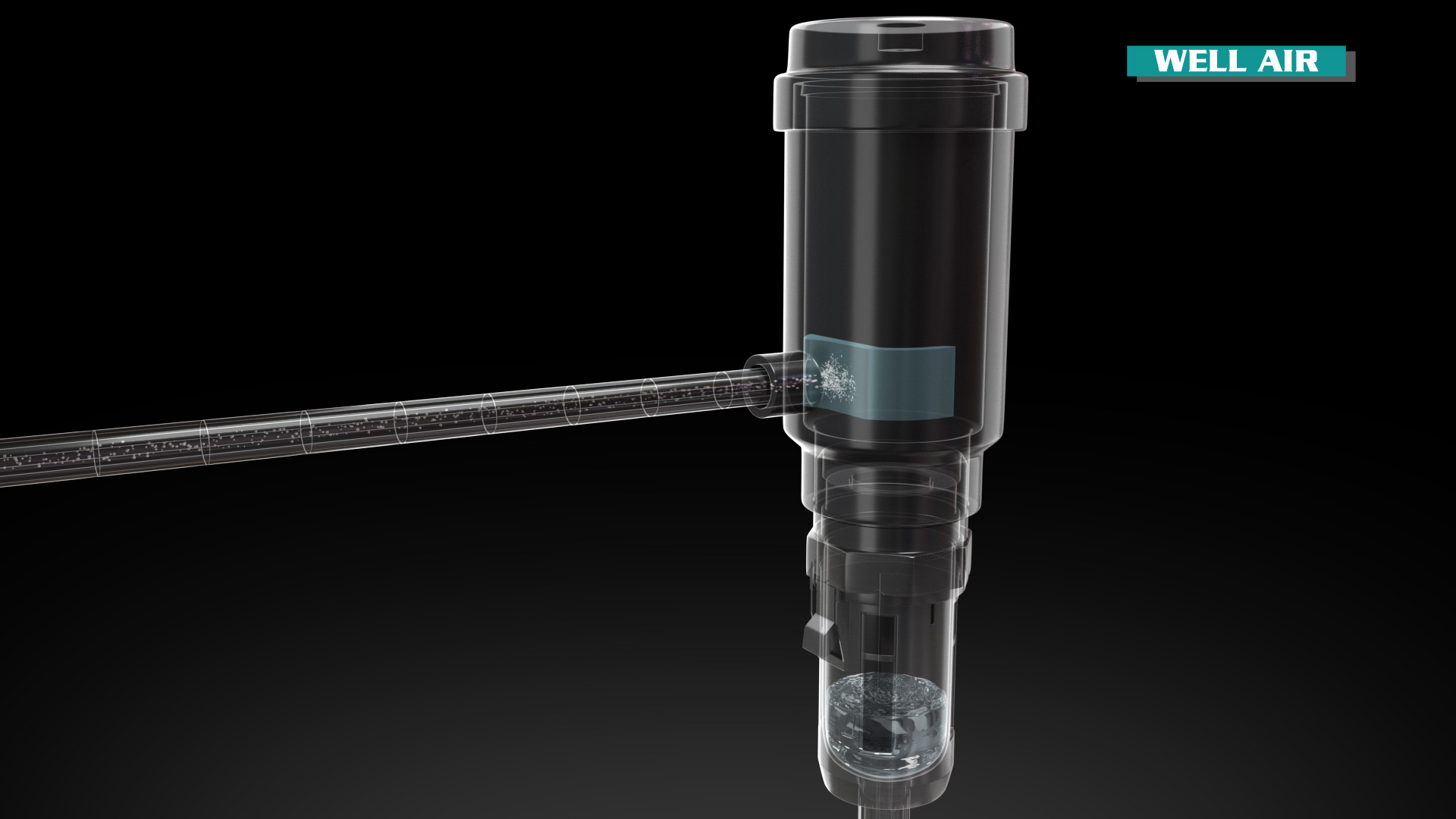
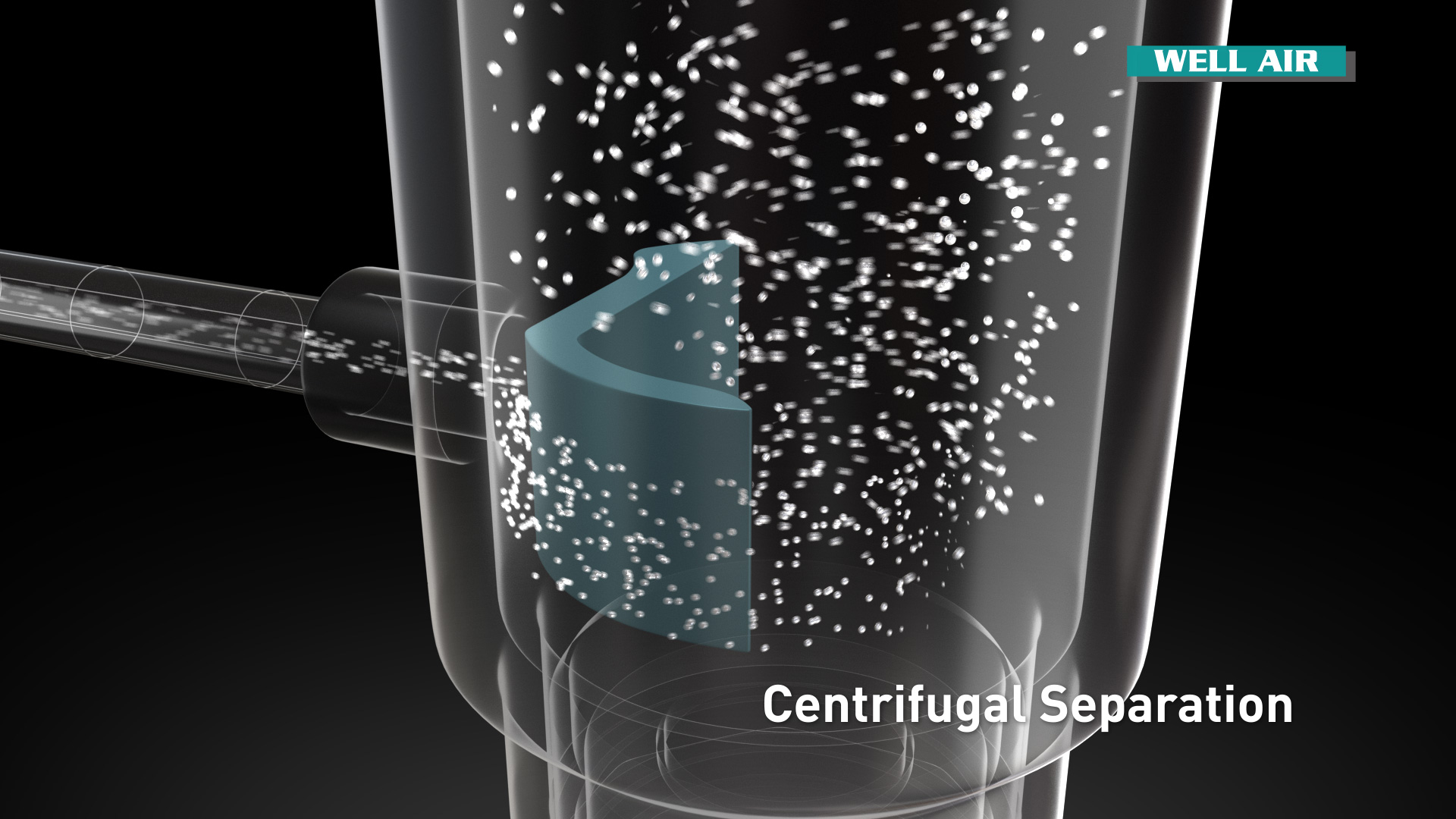
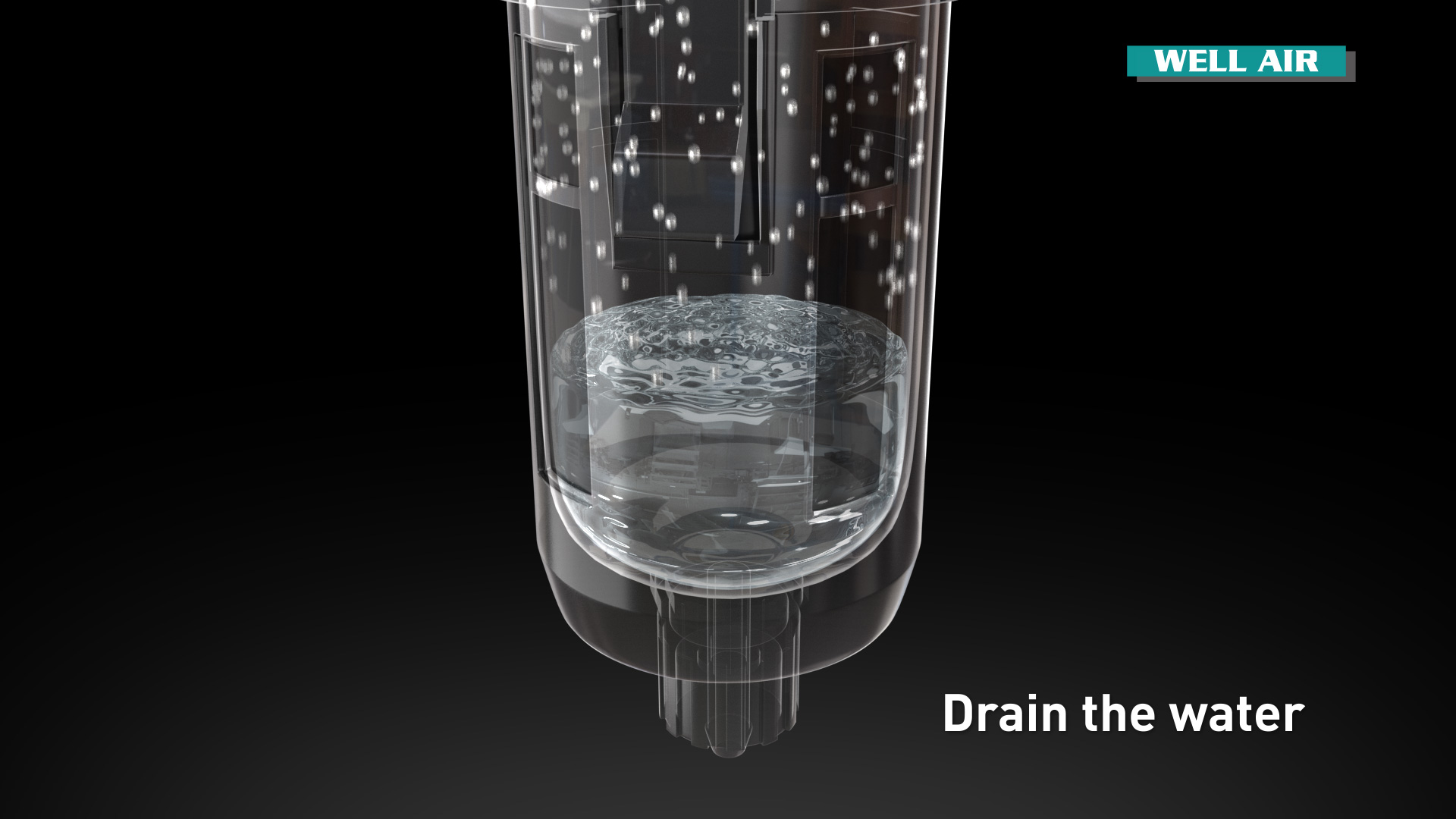
Compressed air is rotated at high speed inside the unit. Centrifugal force and impaction separation move heavier water droplets, oil droplets, and solid contaminants toward the outer wall and down to the drain section.

DT drain configuration of WELL AIR
FEATURE 03

DT Configuration for
Contaminated Drain

The international-market DT configuration is designed with consideration for drain containing liquid oil and solid contaminants. The drain outlet uses a 6 mm hose nipple.

Market Availability

INTERNATIONAL MARKETS

DT Series

The international product lineup consists of WA-150DT, WA-400DT, and WA-1200DT. Availability and specifications should be confirmed for the destination country and application.

View International Lineup
NORTH AMERICA

Catalog Information

For North America, product information is currently provided through the North America Edition catalog. Please refer to the catalog for market-specific information.

View North America Edition
Technology

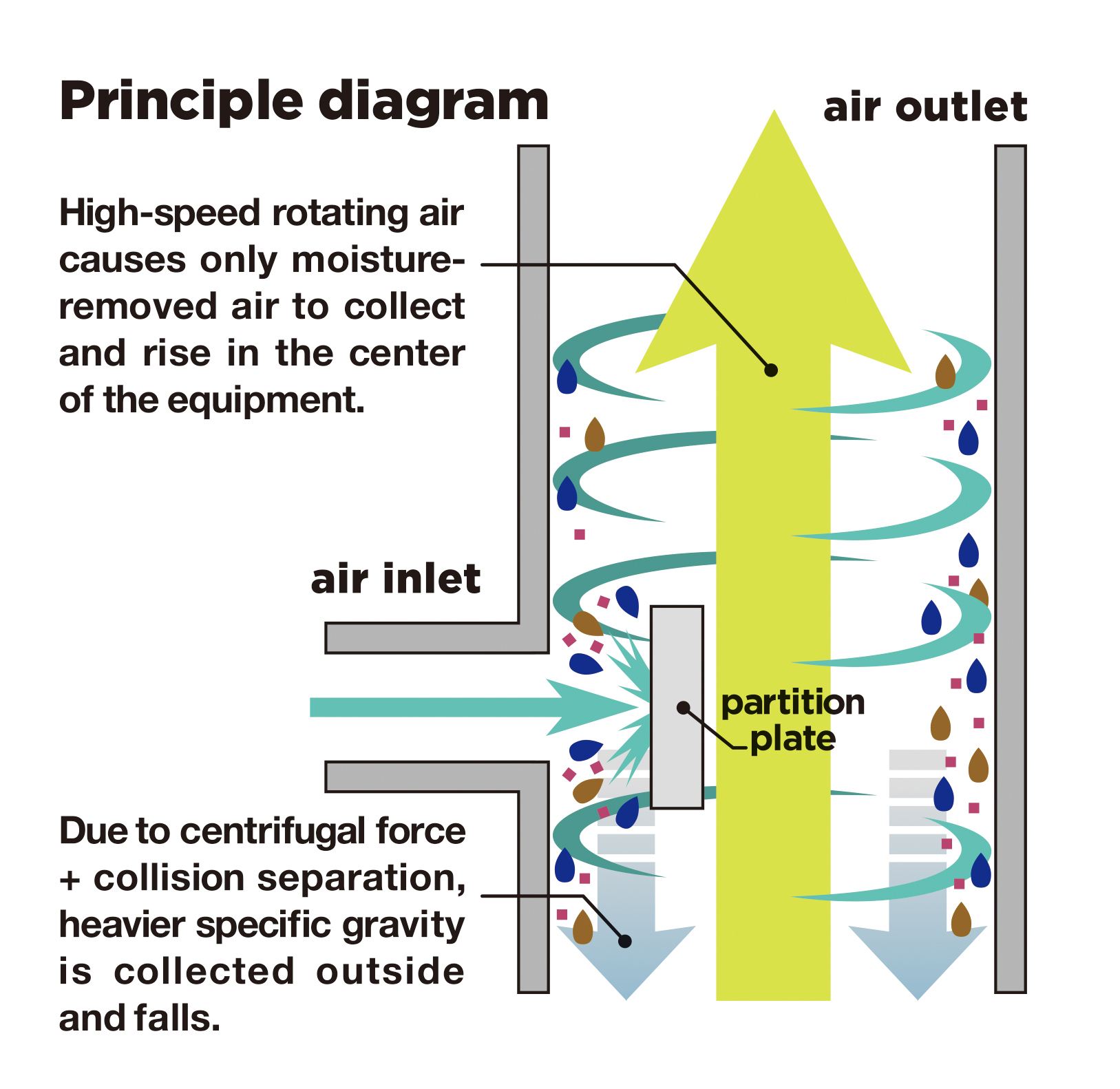
High-speed swirling airflow and impaction separation move droplets and contaminants to the outer wall and down to the drain section.

Diagram showing the separation principle inside WELL AIR
WELL AIR unit installed near the point of use
WELL AIR is installed near the equipment inlet as a point-of-use separation stage for liquid droplets and solid contaminants.

Instead of trapping contaminants in a replaceable element, WELL AIR separates and discharges them.

Compressed air entering the unit is rotated at high speed. Centrifugal force and impaction separation move the heavier water droplets, liquid oil droplets, and solid contaminants toward the outer wall.

  • Compressed air enters the body and forms a high-speed swirling flow.
  • Water droplets, oil droplets, and solid contaminants move toward the outer wall through centrifugal force and impaction.
  • The separated material falls into the lower drain section, while the air collected near the center flows toward the outlet.

The internal separation structure does not use a replaceable filter element. For international markets, the DT configuration is used with consideration for drain containing liquid oil and solid contaminants.

WELL AIR does not remove water vapor or oil vapor. If fine particles, oil mist, or a specified dew point must also be controlled, suitable downstream filtration or drying equipment should be selected separately.

Air Quality Configuration

Required air quality varies
by application.

Starting with WELL AIR, additional treatment stages can be selected according to the air quality required by the application. The configuration can be expanded from the separation of water droplets, oil droplets, and foreign matter to the removal of fine particles, oil mist, and water vapor.

Item WELL AIR Standalone WELL AIR CLEAN WELL AIR DRY
Configuration WELL AIR WELL AIR
+ Precision Filter
WELL AIR
+ Precision Filter
+ Membrane Air Dryer
Main treatment target Water droplets,
oil droplets, and solid particles
3 μm or larger
Fine particles
and oil mist
Precision filter rating: 0.01 μm
Reduction of water vapor
for lower dew point
Typical applications Solenoid valves and cylinders
Pneumatic tools
General air blow
Precision processing
Painting and coating
High-quality air blow
Precision measurement
Condensation prevention
Equipment requiring low-dew-point air
Air-quality objective Treatment of liquid droplets
and coarse particles
Treatment of fine particles
and oil mist
Water-vapor reduction
and lower dew point
ISO 8573-1
system target
[3:4:-] [1:4:2] [1:Selected Specification:2]

WELL AIR Standalone

Configuration
WELL AIR
Main treatment target
Water droplets, oil droplets, and solid particles 3 μm or larger
Typical applications
Solenoid valves, cylinders, pneumatic tools, and general air blow
Air-quality objective
Treatment of liquid droplets and coarse particles
ISO 8573-1 system target
[3:4:-]

WELL AIR CLEAN

Configuration
WELL AIR + Precision Filter
Main treatment target
Fine particles and oil mist
Precision filter rating: 0.01 μm
Typical applications
Precision processing, painting, coating, and high-quality air blow
Air-quality objective
Treatment of fine particles and oil mist
ISO 8573-1 system target
[1:4:2]

WELL AIR DRY

Configuration
WELL AIR + Precision Filter + Membrane Air Dryer
Main treatment target
Reduction of water vapor for lower dew point
Typical applications
Precision measurement, condensation prevention, and equipment requiring low-dew-point air
Air-quality objective
Water-vapor reduction and lower dew point
ISO 8573-1 system target
[1:Selected Specification:2]

* ISO 8573-1 classes are shown in the order of solid particles, water, and total oil. The stated values are system targets based on the rated performance of the configured equipment and our internal test results. They are not guaranteed values.

* Water Class 4 assumes that an appropriate refrigerated air dryer is installed upstream. “-” indicates that no class is specified. The water class for WELL AIR DRY depends on inlet conditions and the selected specification.

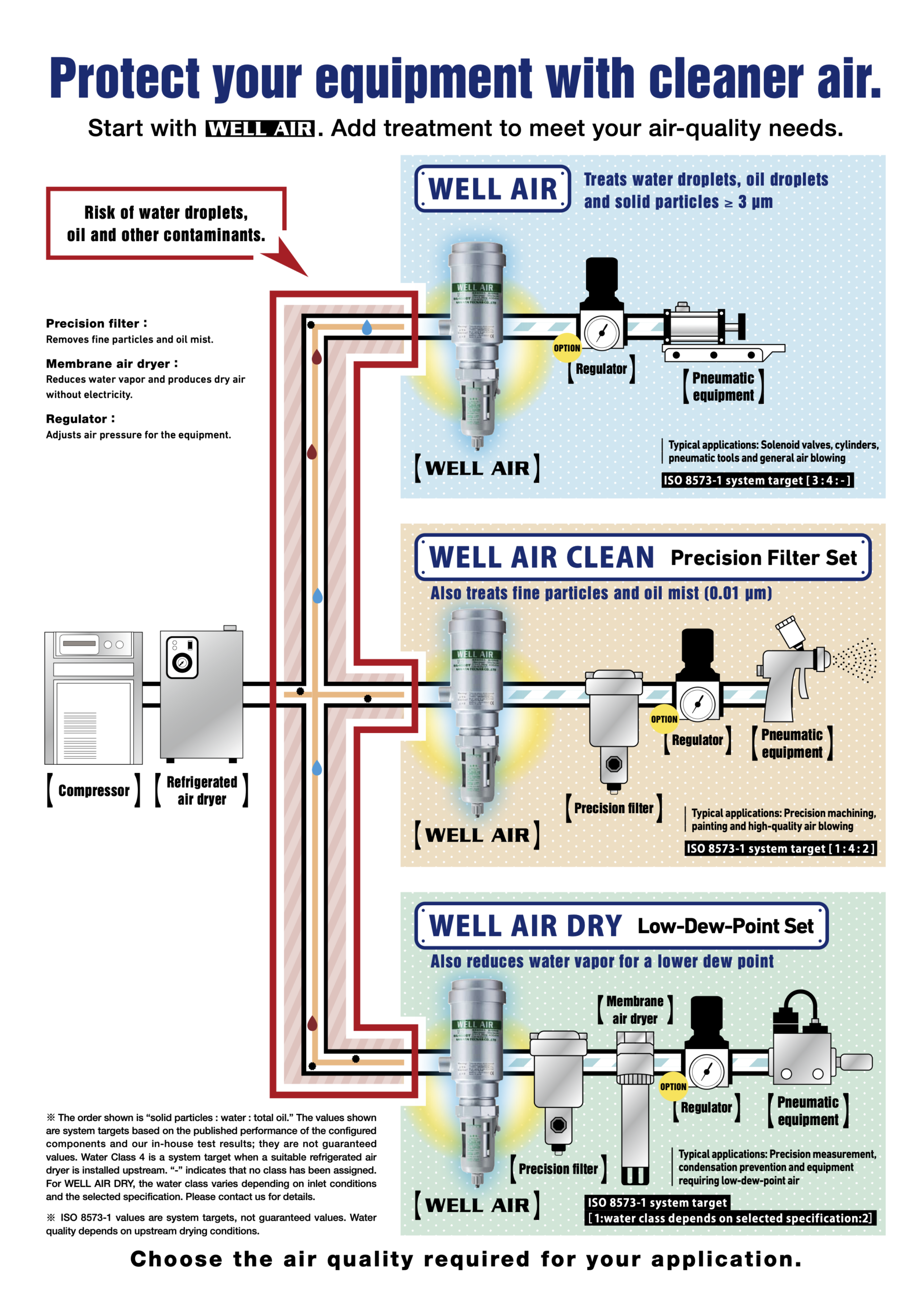
Air-quality configurations for WELL AIR, WELL AIR CLEAN, and WELL AIR DRY

Click the image to view it at full size.

Build the required air quality
in stages from WELL AIR.

WELL AIR first separates water droplets, oil droplets, and coarse foreign matter. A precision filter or membrane air dryer can then be added according to the air quality required by the application.

Use WELL AIR as a standalone unit for general pneumatic applications, WELL AIR CLEAN when fine particles and oil mist must also be treated, and WELL AIR DRY when lower-dew-point air is required.

Rather than relying on one device to handle every type of contaminant, each stage performs a suitable role: liquid droplets and coarse particles first, followed by fine particles and oil mist, and then water vapor when required.

Configuration selection: The appropriate configuration depends on the required air quality, flow rate, inlet pressure, inlet temperature, and piping conditions. Please contact us for application-specific selection.

International markets: WELL AIR units are supplied in the DT specification. Availability of downstream components may vary by market.

North America: Product information is currently provided through the North America catalog.

Technical Column

Learn more about compressed-air treatment configurations

Our technical columns explain why an air dryer alone may not prevent condensate at the point of use, how different dryer types work, and how WELL AIR can be incorporated into a staged treatment system.

Combining an Air Dryer with WELL AIR Types of Compressed-Air Dryers
ROI

Simple ROI Calculator

¥200,000
Annual element cost
savings
¥25,000
Annual labor
savings
¥225,000
Estimated total
annual savings
This calculator estimates only element replacement cost and labor time.
In actual operations, additional impacts such as performance loss from missed replacement, pressure loss, point-of-use equipment trouble, and defect-related costs may further increase the benefit depending on site conditions.
FAQ

Frequently Asked Questions

Yes. WELL AIR is not positioned simply as a dryer replacement, but as a device that handles re-condensation just before the equipment. Even when a dryer is already installed upstream, it can be added if trouble still remains at the point of use.
It is suitable for bulk droplets and coarse contamination, but if finer mist or very small particles are required, a downstream mist filter or similar stage is recommended.
Because WELL AIR uses an element-less design, it does not rely on replacement elements. However, inspection according to installation and operating conditions is still recommended.
Basically, just before the equipment. Since re-condensation can occur along long piping, treating the air close to the point where trouble actually occurs is the rational approach.

Company

KAMATA TECNAS CO., LTD.

1-1-25 Sanchiku, Hakata-ku
Fukuoka 812-0887, Japan

Tel: +81-92-571-2398

View Company Profile

Technical Columns

TROUBLE & CAUSE Why does water still appear after installing an air dryer? Why does condensation occur in compressed-air lines?
INDUSTRY Why does water appear in machine tools? Compressed-air problems in steel plants
SOLUTION & COMPARISON Why an air dryer alone may not prevent water problems Filter vs. element-less separation: what is the difference?
View all technical columns →

Get in Touch

Catalogs and dimensional drawings

Download Documents

WELL AIR product lineup

View Product Lineup

Model selection and custom requirements

Contact Us
Home / Products / Documents / Contact / Privacy Policy
© KAMATA TECNAS

Copyright © WELL AIR All Rights Reserved.

Powered by WordPress with Lightning Theme & VK All in One Expansion Unit

MENU
PAGE TOP